


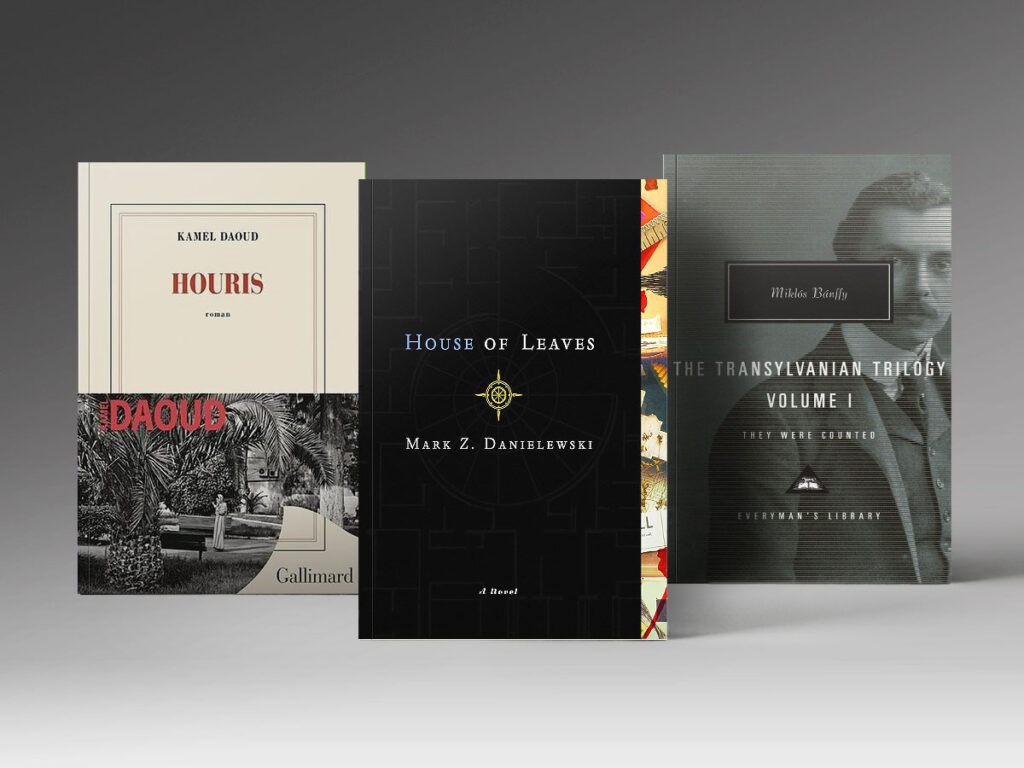
May is the month when the days stretch long enough to squeeze in a walk after work, and the evenings turn warm enough to sit with a book by an open window. If you’re looking for reads that will genuinely linger in your memory, we have three suggestions from entirely different literary worlds.
You’ll find contemporary prose honoured with the most prestigious French literary prize, an experimental horror novel that has fascinated readers worldwide for a quarter of a century, and an epic saga about the decline of an era in Central Europe. Each of these books asks something different of the reader — and each offers something extraordinary in return.
This series is not sponsored. The only criterion for our informal Books Factory seal of approval is the subjective merit of the works themselves.
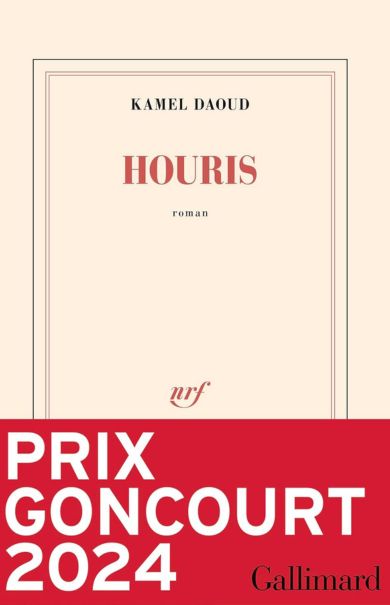
Kamel Daoud, Houris, Gallimard
Kamel Daoud — an Algerian writer and journalist who has lived in France for many years — won the 2024 Prix Goncourt, the most important literary prize in the Francophone world. “Houris” is a novel that confronts one of the most painful chapters of modern Algerian history: the decade of bloody civil war in the 1990s, known as the “Black Decade”.
The protagonist is Aube — a young woman who bears a scar across her throat from having it slit as a child during a massacre carried out by Islamist militants. She survived by a miracle. Now pregnant, she travels across Algeria, confronting a landscape that has officially “forgotten” those events. Algeria’s Charter for Peace and National Reconciliation of 2005 effectively banned any public reckoning with the crimes of the civil war era — and Daoud breaks that silence in full awareness of the consequences.
And the consequences came. The book was banned in Algeria, and Daoud himself, along with his wife — a psychiatrist — became the targets of legal proceedings and an orchestrated campaign of harassment. The case made international headlines and turned “Houris” into not merely a literary event but a political one. We wrote more about this story in a separate article.
The novel strikes with the intensity of its language and its unflinching gaze. Daoud does not seek easy answers or cheap sympathy. Instead, he builds a narrative in which the protagonist’s body — her scar, her pregnancy — becomes a living archive of memory that no decree can erase. “Houris” is a demanding read, but once you have finished it, you will not slip back into the everyday without pause for reflection.
It is worth noting that, as of now, no English translation of “Houris” has been published. The novel is available in French, Polish and German, but English-language readers are still waiting for a translation of this essential work. For those who can read it in one of the available languages, it is an experience not to be missed — and a reminder that some of the most important contemporary literature has yet to reach the Anglophone world.
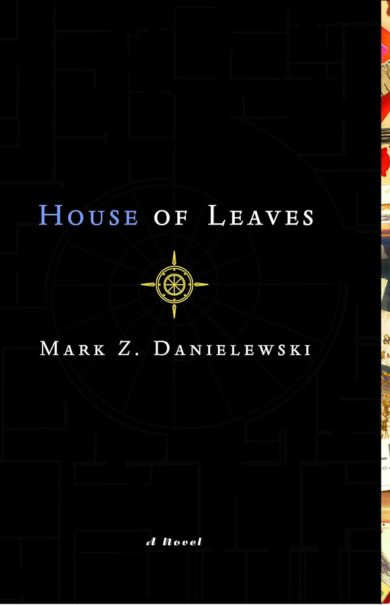
Mark Z. Danielewski, House of Leaves, Doubleday
If you have ever wondered how far you can push the boundaries of what a book can be, “House of Leaves” will give you an answer — and it will probably take you by surprise. Mark Z. Danielewski’s debut novel, first published in 2000, is a work that defies easy classification. Horror? Metafiction? A typographic experiment? All of the above.
At the forefront is the story of the Navidson family, who move into a house in Virginia and discover that its interior is larger than its exterior. Inside, corridors and rooms appear that should not be there — dark, shifting, obeying no known laws of physics. We learn this story through a fictitious academic document, which in turn is annotated and supplemented by a second narrator — a young tattoo-parlour apprentice called Johnny Truant, who gradually spirals into obsession and madness.
Danielewski does not stop at plot alone. The text on the pages of “House of Leaves” arranges itself in spirals, appears upside down, shrinks to a single word per page or sprawls into thickets of footnotes that lead nowhere. The physical form of the book mirrors the disorientation and claustrophobia experienced by its characters. A quarter of a century after its first publication, the novel is enjoying a remarkable second life — it has become a BookTok phenomenon, with a new generation of readers sharing their bewilderment and collectively trying to unravel its mysteries. This is a book that cannot be transferred to a screen or summarised — you need to hold it in your hands, turn it around, flip back to earlier pages.
That is precisely why “House of Leaves” remains one of the most compelling arguments that the printed book offers experiences no other medium can match.
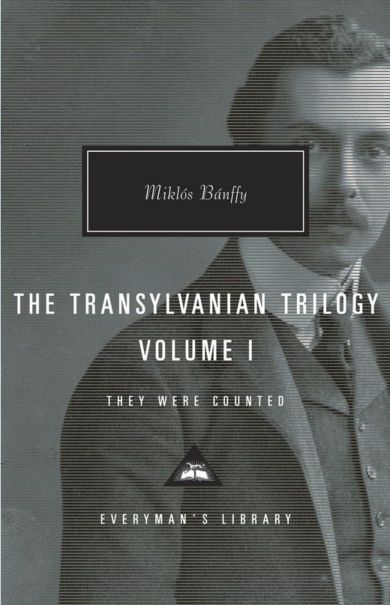
Miklós Bánffy, They Were Counted, Arcadia Books, translated by Patrick Thursfield and Katalin Bánffy-Jelen
We move now to an entirely different world — though one no less fraught with tension. “They Were Counted” (original Hungarian: Megszámláltattál ) is the first volume of the “Transylvanian Trilogy” by Count Miklós Bánffy, a Hungarian aristocrat, politician and writer. The novel was first published in 1934, but it had to wait decades for a wider European readership — the English translation did not appear until 1999.
The action takes place between 1904 and 1914 in Transylvania and Budapest. The central character is the young Count Bálint Abády, who tries to pursue meaningful politics in the Hungarian parliament while entangled in a complicated love affair with the married Adrienne Milóth — a figure in whom critics have seen echoes of Anna Karenina and Emma Bovary, though Adrienne is more acutely aware of her own entrapment. Around the protagonists, aristocratic life unfolds: balls, hunts, party intrigues — an elite dancing on the edge of an abyss, too absorbed in its own rituals to notice the ground giving way beneath its feet. Beneath the glittering surface, a crisis is building that will soon lead to the collapse of the Austro-Hungarian Empire and the outbreak of the First World War.
Bánffy wrote from the perspective of an eyewitness — he himself came from the Transylvanian nobility and held political office in pre-war Hungary. As a result, “They Were Counted” combines the sweep of an epic saga with the authenticity of a memoir. Comparisons to Thomas Mann’s Buddenbrooks or the prose of Joseph Roth are not overstatements. This is literature that shows what the world looks like just before it falls apart — and how the short-sightedness of elites, consumed by their own affairs, becomes one of the causes of a catastrophe nobody was willing to foresee.
Three Books, Three Ways to Spend May
Each of the books we have recommended takes the reader on an entirely different journey. “Houris” confronts us with silenced history and the power of the human body as a vessel of memory. “House of Leaves” challenges the very way we read and experience a book as a physical object. “They Were Counted” lets us immerse ourselves in a world that is just slipping into the past — and understand why its inhabitants could not see it happening.
Whichever title you pick up first, we guarantee one thing: none of them will leave you indifferent. Find a quiet evening, switch off your phone and let yourself be drawn in.
Sources:
- Prix Goncourt 2024 – official laureate announcement: https://www.academiegoncourt.com
- Kamel Daoud, Houris, Gallimard, 2024
- Mark Z. Danielewski, House of Leaves, Pantheon Books, 2000
- Miklós Bánffy, Megszámláltattál, 1934
- Charter for Peace and National Reconciliation (Charte pour la paix et la réconciliation nationale), Algieria, 2005