

Summer has something the rest of the year lacks: room to breathe. The longer day, the slower afternoon, a blanket on the grass or a deckchair on the balcony. It’s the moment when we more often reach for a book not out of obligation, but for the sheer pleasure of reading.
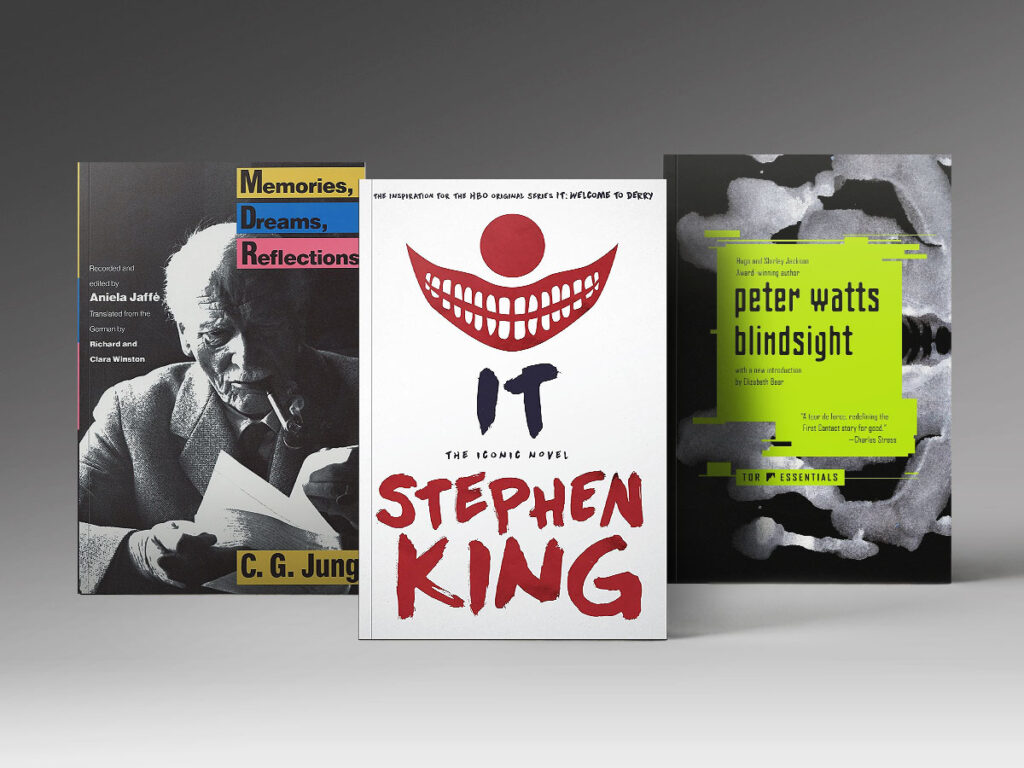
As part of our recommendation series, this time we’re peeking into the holiday suitcase. “Summer books 2026” is a subjective round-up of titles we think are worth taking on holiday: from a meditative autobiography to a horror novel that won’t let you sleep. In this instalment we offer you three very different books. Yet they have more in common than it might seem—but more on that at the end.
The series is not sponsored. The only criterion for awarding our informal Books Factory mark of quality is the subjective value of the publications themselves.
Three reads, three completely different moods
Summer reading doesn’t have to be light at all. Sometimes the books we remember best are the ones that demand our attention, because in summer we have more of it to give. In this selection you’ll find a calm journey into the human psyche, a classic horror story about the power of childhood friendship, and a demanding science-fiction novel that questions the very nature of consciousness.
Below we discuss each of them separately: the context, the starting point of the plot or idea, and who will find it the best holiday companion.
Carl Gustav Jung, “Memories, Dreams, Reflections”—an autobiography that looks inward
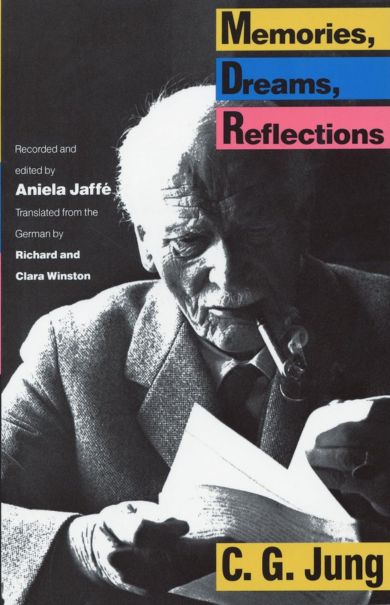
If this summer you’re after a book where you can pause and think, this is a strong candidate. “Memories, Dreams, Reflections” (Vintage; translated by Richard and Clara Winston) is an extraordinary autobiography of one of the most important thinkers of the twentieth century—the Swiss psychiatrist and founder of analytical psychology.
The book’s starting point is intriguing in itself. In 1957, at the age of eighty-one, Jung began working with his student and secretary Aniela Jaffé and the legendary publisher Kurt Wolff on a book about his life. He worked on it almost until his death on 6 June 1961, which makes this publication an exceptionally complete summing-up of his life and thought.
This is not a typical biography assembled from dates and names. Unlike a chronological narrative, the book lets you follow Jung as he discovers meaningful connections in his life’s work. For the reader, that means a read closer to a conversation than a lecture: a story of dreams, visions and inner experiences that shaped such concepts as the shadow, the anima and animus, and the Self.
It’s worth knowing that the discussion around this book is still going on. “Memories, Dreams, Reflections” became a bestseller, yet it draws on fewer than half of Jaffé’s original interviews with Jung—a good deal of material from those candid, wide-ranging conversations was left out. Of note for anyone who wants to dig deeper: on 2 December 2025 Princeton University Press published “Jung’s Life and Work: Interviews for Memories, Dreams, Reflections with Aniela Jaffé”, which presents these interviews in full for the first time—a lead worth following if you want to go further.
Who is it for? For you, if you enjoy reflective reading, to be taken in peace, without rushing. It’s a good starting point if you want to get to know Jung’s thought “from the inside” before reaching for his more theoretical works.
Stephen King, “It”—an idyll full of dread
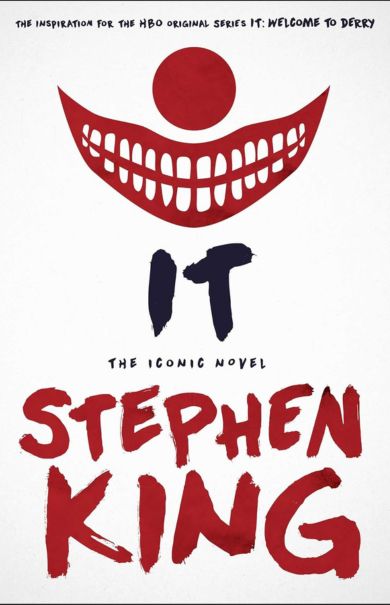
Since we’re on the subject of the season, you couldn’t ask for a better coincidence: Stephen King’s cult novel turns forty this year and works wonderfully not only as a summer horror read but also, in terms of plot, kicks off in summer. “It” (Scribner) tells the story of the town of Derry and a creature that wakes every generation to hunt children.
The starting point seems simple and terrifying. The novel follows a group of children terrorised by a sinister being that exploits its victims’ fears in order to hide—most often taking the form of a clown named Pennywise. A group of outcast children, “The Losers’ Club”, discovers that this ancient evil is hunting precisely them. The monster wakes roughly every 27 years, and the Losers’ Club vows to face it.
The atmosphere is especially important here. The first part takes place during the summer of the mid-1950s. In an era of an almost utopian, idyllic picture of small-town America, into which dread slowly seeps. It’s a fundamentally metaphorical device: beneath the sugar-coated façade of the “perfect town” lurks something the adults would rather not see, and which only the children notice.
What makes this novel so gripping is not the monster itself, but what it does. Pennywise exploits its victims’ fears and becomes exactly what each person fears most. Beneath this layer of horror, though, pulses a story about memory, childhood trauma and the loss of innocence.
The novel also has the status of a classic. King started writing “It” in 1980 and finished five years later—the result was a story running well over a thousand pages. If you have a long holiday ahead of you, that size will work in your favour. The story from Derry is still very much alive in pop culture: it has spawned a 1990 miniseries, a two-part film adaptation—”It” (2017) and “It Chapter Two” (2019)—as well as the series “It: Welcome to Derry” from 2025.
Who is it for? For lovers of horror and those who like thick novels to last the whole holiday. It’s also a coming-of-age read: beneath the layer of horror lies a story about loyalty and about what stays with us from childhood.
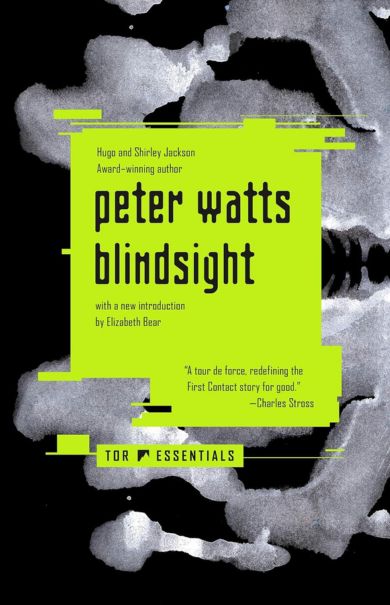
Peter Watts, “Blindsight”—science fiction for the demanding
Finally, something for those who like to give their brain a challenge in summer. “Blindsight” (Tor Books) is among the most highly regarded hard science-fiction novels of the past two decades—demanding, intense and full of ideas that stay in your head long after the last page.
The book by the Canadian writer Peter Watts was published by Tor Books in 2006. The novel won Japan’s Seiun Award for best translation and received nominations for the Hugo Award, the John W. Campbell Memorial Award and the Locus Award. The premise pulls you in from the first pages, and its starting point is first contact: a crew of astronauts sets out to investigate a trans-Neptunian comet that is sending an unidentified radio signal.
The novel is not really about space, though—it’s about the human mind. The title itself refers to a real neurological phenomenon: people with damage to the visual cortex who report a complete absence of conscious sight can nonetheless register visual stimuli unawares. They react to movement, avoid obstacles and recognise emotions, even though subjectively they claim to be entirely blind. On this, Watts builds an uncomfortable question: do we actually need inner, self-aware experience for anything at all, or is it only externally observable behaviour that counts?
It is also—perhaps above all—a deeply unsettling book about relationships between people, and more precisely about how flawed they can be. Watts shows characters cut off from one another cognitively and emotionally, incapable of true understanding, and it is precisely this loneliness within a group that frightens most. The novel also features resurrected vampires and genetically modified characters, balancing on the edge of what is still human.
A detail that nicely shows the book’s standing: “Blindsight” has made its way onto university reading lists, from philosophy to neuropsychology. So if you’d like to dig deeper, we recommend looking into the German philosopher Thomas Metzinger and his work “Being No One”, out of which the novel’s concept grew. It’s a good lead for anyone whom “Blindsight” draws in enough to look further.
Who is it for? For persistent science-fiction readers who aren’t afraid of difficult questions and dense, scientifically grounded language. This isn’t a read “for the beach between cocktails”, but for a long evening.
Three books, one summer
What links the autobiography of a Swiss psychiatrist, a horror story from Maine and a cosmic novel about consciousness? Seemingly nothing, and yet more than it might seem. Each of them is driven by the theme of childhood: its shaping, its loss and that difficult moment when naivety gives way to experience.
Jung casts his memory back to his earliest dreams and visions. King describes children whom the adult world strips of their innocence. Watts asks what remains of a person once you strip away what we took to be the core of our identity. Each of these books is also deeply psychological—looking into the characters’ interior rather than outward.
Whichever you choose to start with, it’s worth thinking of them also as objects that will keep you company. Because reading in summer is not only content but also experience: the weight of the volume in your hand, the rustle of pages, the smell of paper warmed by the sun. That pleasure is conveyed most fully by a well-made, physical book—one you want to return to season after season.
Find a quiet afternoon, switch off your notifications and let yourselves be drawn into these stories. Even when they’re a little uncomfortable.
Sources: