


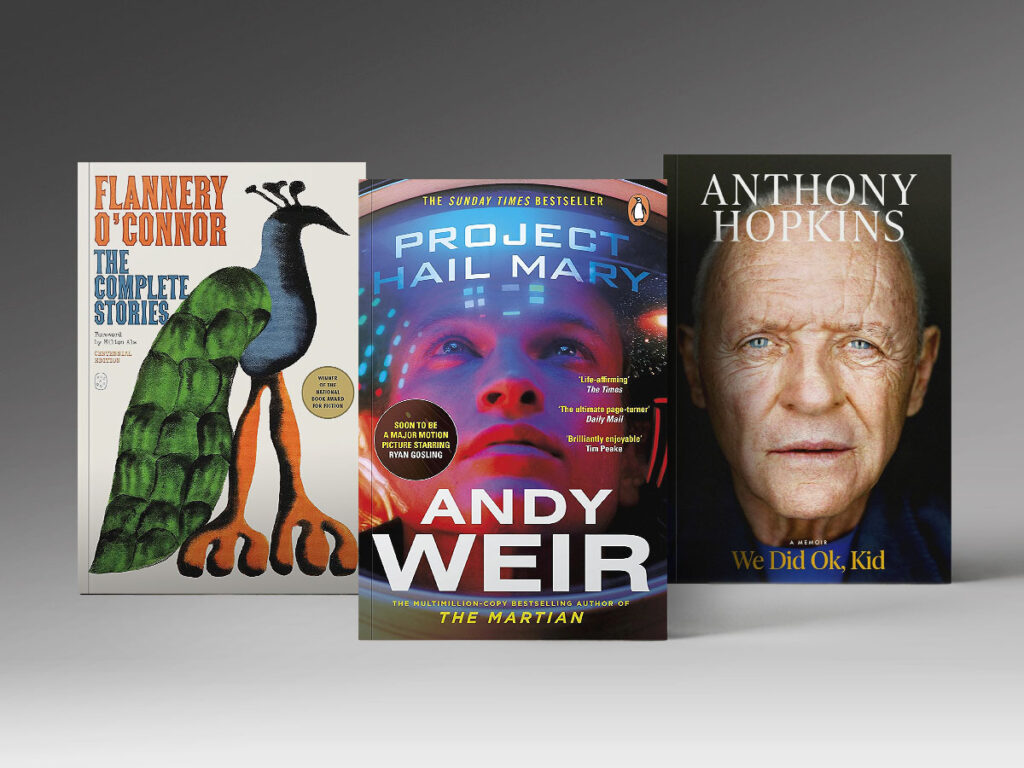
Spring is a season of transition. A space between what has been and what is still to come. It is also the time when we more often reach for books not simply to pass the time, but to feel something or understand something more deeply.
That is why this selection brings together three titles linked by one shared thread: each tells the story of a person pushed to the edge. Flannery O’Connor ventures into the darkest corners of human nature. Andy Weir sends his protagonist into space, where the future of an entire planet hangs in the balance. Anthony Hopkins returns to his own past and reveals what the road really looks like when, from the outside, it seems straightforward.
This series is not sponsored. The only criterion for receiving the informal Books Factory mark of quality is the subjective value of the books themselves.
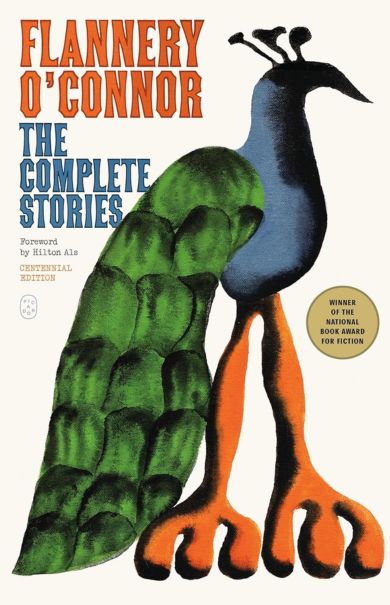
Flannery O’Connor, “The Complete Stories (Centennial Edition)”
Flannery O’Connor is widely regarded as one of the greatest masters of the short story in American literature. Her fiction has inspired creators as different as the Coen brothers, Alice Munro and Stephen King. Not without reason — this is literature that offers the reader no comfort.
O’Connor takes us to the American South: a world shaped by poverty, religion and social tension. At first glance, everything feels familiar, even ordinary. Her characters live everyday lives, talk, travel, and try to find their place in the routines of daily existence. But that is only the surface.
Gradually, O’Connor begins to uncover something far more disturbing. In her stories, spirituality offers no solace. Evil does not arrive from the outside — it grows מתוך the characters themselves and from the choices they make. It often appears suddenly, brutally, without warning.
Especially striking are the stories of children and young protagonists trying to make sense of the adult world — a world full of contradiction, violence and religious fear. This inward perspective is what makes O’Connor’s prose at once plain in form and extraordinarily dense in meaning. “The Complete Stories” confronts the reader with a difficult question: how much can we bear before we choose to look away?
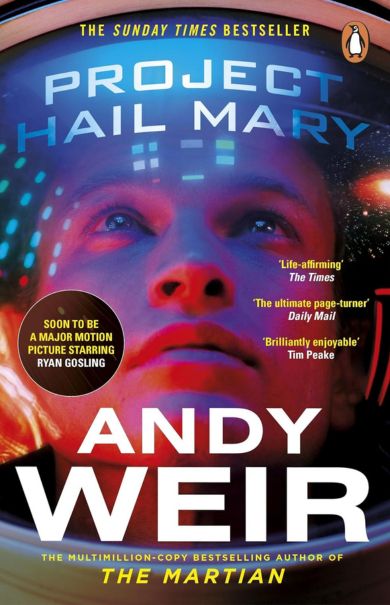
Andy Weir, “Project Hail Mary”
The author of “The Martian” returns to a cosmic setting. Ryland Grace wakes up aboard a spacecraft with no memory and no context. Step by step, he discovers who he is and why he has found himself in a situation on which the future of Earth depends.
The book’s greatest strength lies in the way the story is told. The reader discovers everything alongside the protagonist — one step at a time, one experiment after another. Knowledge is not an addition here, but the axis of the plot.
Weir knows how to write about science in a way that creates real tension. Every solution leads to another problem, and every decision carries consequences. That is why the story does not rely on action alone, but on the process of thinking itself.
It is also a story about loneliness, though not the romantic or metaphorical kind. Here, loneliness is physical and practical. It means no support, the need to make decisions alone, and full responsibility for what follows.
It is worth adding that “Project Hail Mary” has been adapted for the screen, with Ryan Gosling in the leading role. The film has brought in a new audience, but the book remains the fuller experience — it allows readers to enter the protagonist’s way of thinking and truly live through the mission.
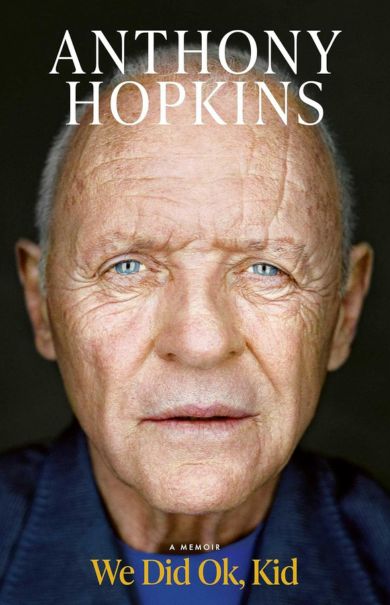
Anthony Hopkins, “We Did Ok, Kid: A Memoir”
Anthony Hopkins begins his story in a place that gives little hint of future greatness. He grows up in a small Welsh town, struggles at school, and does not fit the mould expected of him. In the eyes of those around him, he seems more like someone unlikely to succeed.
The turning point comes with his encounter with the theatre. That experience gives his life direction. In time, he enters the Royal Academy of Dramatic Art and begins building the career that will take him to the world’s greatest stages and screens. But this is no plush success story.
Hopkins writes with striking openness about his alcohol addiction, which destroyed relationships and nearly cost him his life. About two failed marriages. About the loneliness that, despite fame, never fully disappears.
Some of the most moving passages are those in which Hopkins describes the work of an actor. Not as a burst of emotion, but as a conscious, precise act. Recalling his performance as Iago in “Othello”, he stresses that what leaves the deepest impression is not shouting or display, but calm and control — the cool, logical guidance of the audience through a character’s mind. This is a memoir that does not build a legend, but strips it bare. And that is precisely why it has such force.
Spring as a Moment of Change
Three books, three very different worlds: the American South, outer space, and the hidden cost of a great career. What connects them is a moment of stillness. A moment when the protagonist must confront reality — and themselves.
Spring invites exactly these kinds of stories. Not because they are light, but because they provoke reflection. The best books are the ones that stay with us and quietly alter the way we see the world.