


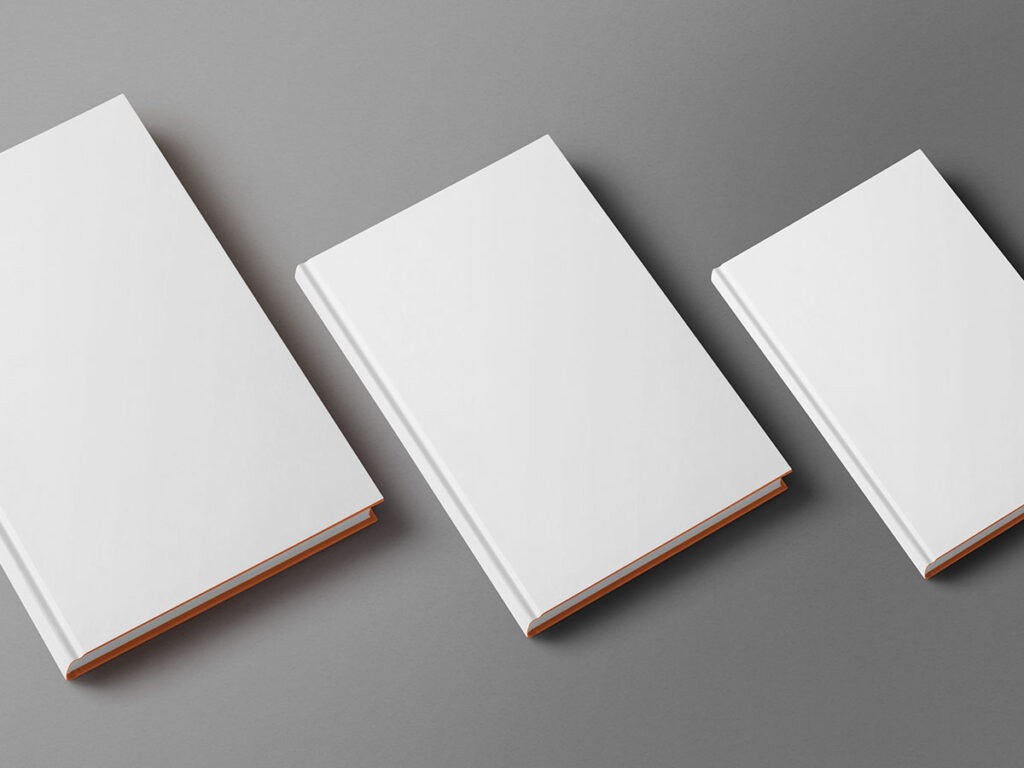
Book format is a fundamental technical parameter that defines the final trimmed size of a publication. Although often treated as a minor detail, it has a direct impact on page proportions, margin width and reading comfort during longer engagement with the text.
What book formats are available on the publishing market?
Books are available in several standard sizes, each corresponding to specific print formats. The most commonly used formats in book printing include:
- A6 – 105 × 148 mm,
- S6 – 125 × 195 mm,
- A5 – 148 × 210 mm,
- A5+ – 155 × 230 mm,
- B5 – 170 × 240 mm,
- A4 – 210 × 297 mm.
These formats are particularly popular in digital production, as they combine reading ergonomics with optimal use of the printing sheet.
In the American market, inch-based formats are especially common:
- 5 × 8 in (127 × 203 mm) – often chosen for fiction,
- 6 × 9 in (152 × 229 mm) – one of the most widely used formats in US self-publishing.
The 6 × 9 in format is similar to the European A5+, which makes it a natural choice for publications aimed at English-speaking markets.
Each format corresponds to a different type of publication and specific design requirements. Book dimensions determine typesetting, image size and the relationship between text and white space. They also affect the weight of the copy, the thickness of the book block and how comfortable it is to hold.
What is the best book size for printing?
There is no single universal format suitable for every publication. Already at the planning stage, it is worth analysing which book dimensions will be appropriate for the intended audience.
For fiction, A5 is often chosen, along with its slightly larger variant A5+, which offers more space for typesetting and inner margins. This format makes books easy to transport and convenient to read outside the home. Larger academic publications, on the other hand, usually require bigger formats. These allow for clearer arrangement of content, charts and footnotes, and make analysis and comparison easier.
A similar principle applies to publications with numerous illustrations. A good example is cookbooks, which are often produced in trade formats, such as 130 × 200 mm, on higher-quality paper. This allows the reader to engage not only with clearly presented content, but also with accompanying images that together create a more engaging experience.
It is worth remembering that format also affects page count. The same text in a smaller format will result in more pages, which translates into a thicker book block and higher printing costs. A larger format, in turn, means fewer pages for the same volume of content.
Format also impacts production efficiency—properly matching dimensions to the printing sheet allows for optimal paper use and reduces material waste.
Book format characteristics – when to choose which?
Choosing smaller formats (e.g. 105 × 148 mm) makes sense when the goal is portability and compactness, especially for books intended for travel. Such publications can be read anywhere: at home, on the move or on public transport.
Medium formats (e.g. 148 × 210 mm) work well for publications that combine usability with aesthetics. They are extremely popular among fiction authors, and their balanced size offers both practical and functional value.
Larger formats (e.g. 176 × 250 mm) are recommended for academic publications. They make it easier for the reader to engage with the content, absorb it and critically analyse it based on available sources.
Practical aspects of choosing a book format
The choice of format also translates into specific functional benefits. Smaller formats make storage and transport easier. Their reduced size also means lower weight, which is an additional advantage.
Larger formats, while requiring more storage space, can become distinctive items that combine literary and decorative value. The format of a book also influences how it is perceived by the reader.
How to choose the right format for your publication?
Selecting a book format affects proportions, readability and functionality. For novels and fiction, A5 remains the most commonly chosen format—compact and suitable for longer reading. Photo books and academic publications usually require larger formats such as B5 or A4, which allow for clear presentation of illustrations, charts and diagrams.
When choosing a format, it is worth considering not only aesthetics, but also the purpose of the book, the target audience, distribution method and budget. A well-chosen format makes typesetting easier and aligns the publication with production conditions.
At the design stage, Books Factory’s free tools—printing calculators and template generators—support the preparation of production files.