



Not every journey begins with a ticket. Sometimes, the first sentence is enough.
This February, we suggest a classic race against time, an intimate portrait of an American labourer, and a sweeping family saga set against the backdrop of Georgia. Three very different journeys – through space, memory and history.
The series is not sponsored. The only criterion for receiving the informal Books Factory mark of quality is the subjective value of the publication itself.
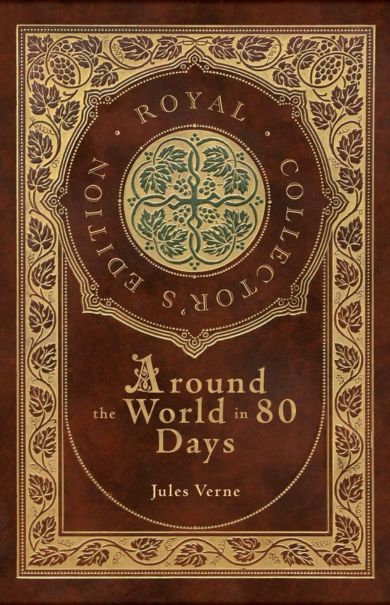
Jules Verne, Around the World in Eighty Days
When the novel was published in 1872, the world was in the midst of a technological revolution. The opening of the Suez Canal shortened trade routes, railways accelerated the pace of travel, and the global map seemed to be shrinking.
Phileas Fogg wagers that he can circumnavigate the globe in eighty days. He sets off with his loyal Passepartout, while Detective Fix follows close behind. Trains, steamships, an elephant in India and improvised logistical solutions lie ahead. Verne’s novel is a story of precision, vanishing time and faith in progress.
Reading it today, it is difficult not to think of our own era. Of intercontinental flights, satellite maps on our phones, the fact that within seconds we can see places that took Verne’s characters weeks to reach. And yet the speeding world still fails to bring peace, immersing humanity in noise and chaos.
“Around the World in Eighty Days” is more than an adventure novel. It captures the moment when humanity believed technology would allow it to master reality. In the twenty-first century, we are still asking whether that belief was justified.
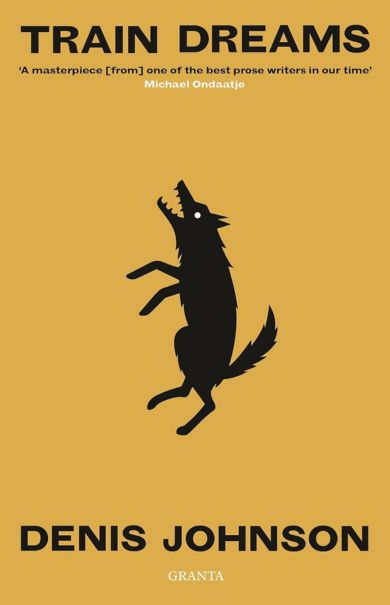
Denis Johnson, Train Dreams
The first half of the twentieth century. Mountains, forests, snow – and among them a man living on the margins, wherever work can be found. Robert Grainier moves across Idaho, drifts into Washington State, comes close to the Canadian border. He builds railway lines, repairs bridges, works in the timber camps. His life is not the American Dream, but a quiet, modest existence built on repetition.
Then comes the fire. Flames consume his home – and with it, his wife and daughter.
Denis Johnson does not drive this story towards a spectacular finale. Instead, he shows how a man learns to live with the knowledge that the world contains a void that cannot be filled. “Train Dreams” is short, austere and precise.
It is a story about moving forward even when you no longer know why. And about melancholy that is not a passing mood, but a permanent backdrop – like the smell of smoke that lingers on clothes long after the fire has died.
The novel was also adapted for the screen by director Clint Bentley, receiving Academy Award nominations, including for Best Picture.
Nino Haratischwili, The Eighth Life (for Brilka), Volume 1
The early twentieth century. Georgia under Tsarist Russia. The Jashi family grows up in the shadow of history – a force that reshapes human plans without asking permission.
“The Eighth Life” unfolds across generations: from the October Revolution through Stalinist terror, the Second World War, the collapse of the Soviet Union and into the present day. The narrator, Niza, attempts to understand her family’s fate while searching for her own place between Georgia and the West.
Haratischwili combines historical precision with an intimate perspective. It is a story of politics, loyalty, betrayal, ambition and the inherited weight of the past. Running through it is the motif of a mysterious chocolate recipe – a symbol of a family legend that both tempts and destroys.
If Verne shows the world in motion and Johnson portrays a man against the landscape, Haratischwili reminds us that the most difficult routes lead through history and memory.

Three Different Directions
In February, we recommend:
- a classic adventure that speaks surprisingly well to the present day,
- an intimate story from the American frontier,
- an epic family saga in which private lives intertwine with European history.
And if you are working on your own book, wondering how it will look in print, it is worth remembering that every story also follows a journey – from file to finished copy.